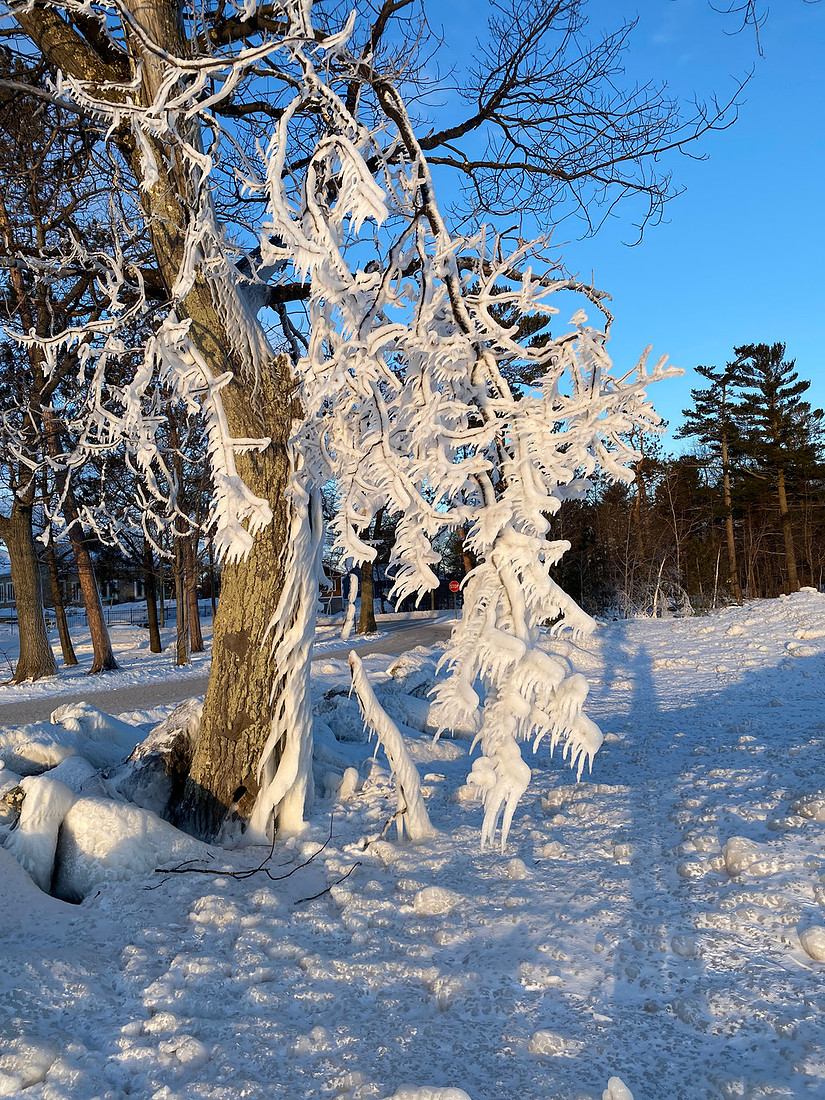
 Picnic Rocks
Living in the Upper Peninsula, we grew up with what many would call harsh winters. Gloomy skies stretched for days. Snow fell steadily—sometimes daily. Snowbanks rose so high they seemed to meet the rooftops, and then came more snow.
As children, this was simply winter. You didn’t question it; you accepted it. You were grateful for what it brought—skiing after school, bundled laughter with friends, school activities that carried us through the darker months. February always felt like a quiet victory. It was short. You could see the light shifting. The sun lingered just a little longer each afternoon. If you made it through February, you knew brighter days were ahead.
Fifty years later, this is one of those winters—the kind I remember from childhood. Deep snow. Long stretches of gray. A season that feels unrelenting. And yet, for some reason, it feels longer now than it did then. February no longer signals the near end of winter; instead, it feels like we may have months still ahead.
The last five years lulled us into something gentler. Winters were mild. Two years ago, we had barely any snow at all. It almost felt foreign. Living here teaches you one thing above all else: you never know what you will encounter.
That unpredictability is part of the magic. It’s why people come here—to be amazed, to explore, to experience the beauty of snow-laden forests and the quiet majesty of frozen shorelines. Winter here is not just a season; it is an identity.
For me, it is also a canvas. The long shadows, the sculpted drifts, the icy edges along Lake Superior—these are not simply signs of endurance, but of resilience and stark beauty. Winter asks us to slow down. To notice. To find light even on the gloomiest days.
And perhaps that is what this longer winter is teaching me again.
In the Upper Peninsula, you never know what you will encounter. But if you look closely enough, there is always something breathtaking waiting in the snow.
